The Reflections and Reaffirmations Part
I thought I would do another blog entry sooner than this but hey, I was “busy”! Did you not know it was Christmas and the New Year is knocking on our door? Gifts to buy and wrap, cards to send, cookies to make, errands to run, chores to do, teens to take places, orders to make on the line over the interweb (I like to call it this for the benefit of my kiddos), end of year inventory and donating for Thera-Wear (would you like a shirt?), obsessing over where my senior is going to go to college, and and so on and so on. I am slowly coming to understand that “busy” is a choice. There are so many things competing to occupy our days and many worthwhile causes and activities in which to invest our time. In fact, in the booming days of the aforementioned Thera-Wear.com, Heather came up with another great subtle whisper of a slogan for our shirts – “I’m in volunteer rehab”.
I’ve never been able to manage many things well at one time – I’m just not one of those types- though I’ve tried. For me, there’s meaningful, soul-fulfilling busy and busy-just-being-busy-busy. At my ripe old age of 47, I’m finally understanding that being able to focus on what I find meaningful for me in the big picture of life brings contentment, joy, energy and productivity. Everybody’s soul fulfilling, meaningful busy is different and changes over time. I have some really talented friends that are true examples of this. They are educating our children and starting youth programs, creating art, playing their musical instruments, starting community gardens and farmer’s markets, volunteering their time and talents to worthy causes, writing books, providing fresh and delicious food from their food trucks and restaurants, making a living for their families and raising kind, compassionate children. So when I’m not busy-being-busy to get through the day, and take time for reflection, my inner ordinary voice is whispering to love and support my family and friends (and all that goes with that) and to help promote and learn more about wise conservation and the value of our public lands. These are the themes of my New Year’s resolution (along with healthier eating of course!).
I was recently asked by my daughter’s English teacher to write an essay about conservation. This made me really think in the simplest of terms (and want to use my very best grammar) as I was writing to an audience of middle school students. Where do I start? I thought of a hymn we sang frequently in morning chapel at the Episcopal school I attended 3rd through 8th grade.
And so it flowed…….
Conservation and why it’s important to all of us
One of my favorite memories of All Saints school was singing hymns in chapel. The one that encapsulates my experience and has been forever embedded into my spirit is the hymn “All Things Bright and Beautiful”. It goes like this:
All things bright and beautiful
All creatures great and small,
All things wise and wonderful,
The Lord God made them all.
Each little flower that opens,
Each little bird that sings,
He made their glowing colors,
He made their tiny wings.
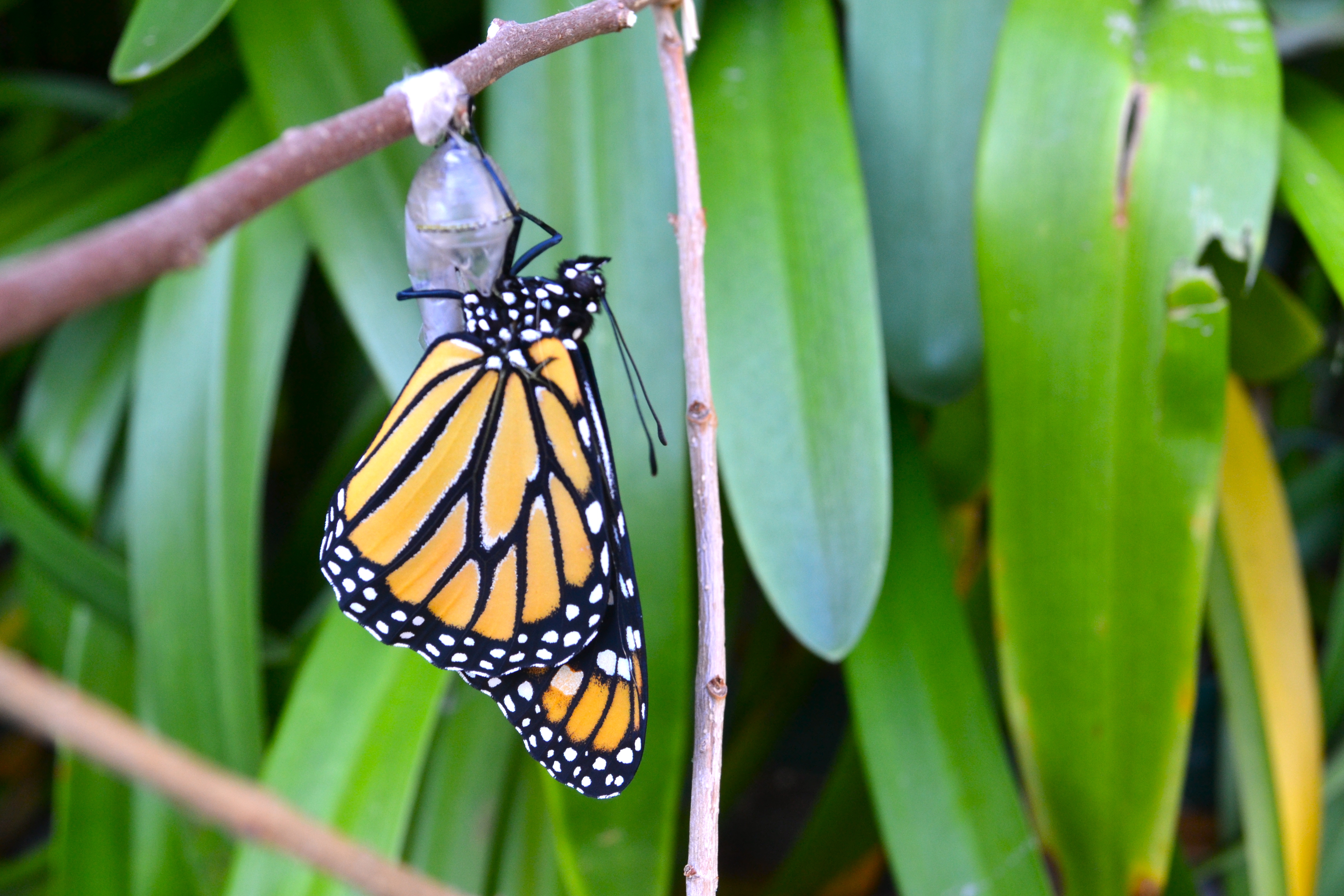
There are a few other verses which mention the purple-headed mountains, the running river, the meadow where we play, the pleasant summer sun, the ripe fruits in the garden, and we’re reminded – He made them, every one.
In doing a little research on my favorite hymn, I learned it was first published in 1848 by Mrs. Cecil Alexander in her book Hymns for Little Children. I discovered that the inspiration for this hymn may have come from a publication in 1802 by William Paley, called Natural Theology. He communicates that the natural world was the creation of God and showed the true nature of the creator. According to Paley, God had carefully designed “even the most humble and insignificant organisms”.
I know we all hear that we should be good stewards of God’s creation. We may not think about it all the time but deep down, we all know it is one of the most, if not the most, important thing we can do in this life. All of us want clean water to drink, clean air in our lungs, and good food to eat. The forests do far more than provide timber. They purify and renew our air supply and provide for a stable climate. Forests also provide natural filtration and storage systems that process nearly two-thirds of the water supply in the United States. Coral reefs give us food. Our wetlands shelter our coasts from storms. We want undeveloped natural spaces for us to explore, play, and connect to our inner voices and for the animal species that can only survive in these natural environments. Whether we call it conservation or something else, we are all for it.
The definition of conservation is the management, protection, and wise use of natural resources. As we learn in science, natural resources include all the things that help support life like water, soil, sunlight and minerals. But our earth has a limited supply of many of our natural resources and our use of them grows as our world population increases. Rain forests once covered 14% of the earth’s land surface; now they cover only 6%. Did you know that tropical rain forests took between 60 and 100 million years to evolve and are believed to be the oldest and most complex land-based ecosystem on earth, containing over 30 million species of plants and animals? In addition, once nonrenewable resources like coal and petroleum are used up, we are not able to replace them as they too had been formed over millions of years. If we do not conserve, most of the earth’s resources would be consumed and we wouldn’t be able to survive.
Conservationists work to ensure that the environment can continue to provide for our needs today and for future generations. Put simply, Nature doesn’t need people, but people need Nature.
“Conservation is a state of harmony between men and land.” – Aldo Leopold
(check out more of these short conservation films called Nature is Speakingproduced by Conservation International)
What is reassuring to me is that we, the human race, are so creative and smart that we are creating new ways of sustaining our need for energy with renewable resources such as wind and sunshine and manufacturing recycled products made from what we throw away. We are making very fuel-efficient cars and trucks and taking reusable bags shopping. We are using LED light bulbs and starting community gardens. Frankly, some of these things are what my grandparents naturally did – we are simply getting back to doing them. Speaking of my grandparent’s generation, they had a saying: “Use it up, wear it out, make it do, do without”.
They may have been the greatest generation, but I’ve heard it said that this generation is the RE-generation! There is much hope in the hearts and minds of us all, especially our youth.
I did a bit of research on some ordinary kids making a difference in our environment that can inspire us all….
Olivia Bouler is an 11-year-old who wondered what she could do after the massive Deepwater Horizon oil spill in the Gulf of Mexico. While most kids and adults wrung their hands and wondered what we could do to make sure it didn’t happen again, Olivia had a great idea and was called to action. A lifelong bird-lover, Olivia partnered with the Audubon Society to sell off original sketches of the birds most affected by the spill, and raised more than $200,000 for Gulf Coast relief efforts. That’s pretty impressive.
Nine-year-old Mason Perez was eating a hot dog at the baseball field. He stopped by the bathroom to wash his hands. The water came out so fast that he turned it down halfway — and when he realized that less pressure didn’t deter his ability to clean his hands, he was inspired to use that discovery as a jumping off point for his science fair project. He tested valves at residences and businesses all over town, saving between 6 and 25 percent of the water by turning down the pressure.
We can all do something too…everyday. We can reduce the amount of stuff we use, reuse what we might normally use one time, and recycle what we throw away. We can pick up trash on the street or the beach, use reusable lunch containers in our lunch kits or for take-out, and educate ourselves on ways to combat pollution or to help save an endangered animal. Small things make a big difference, particularly when we all do them. Consider your impact in using a reusable bag at the grocery store instead of a single use plastic bag that doesn’t decompose and ends up polluting our oceans…
As Dr. Seuss has said, “Unless someone like you cares a whole awful lot, Nothing is going to get better. It’s not.”
Oh, and here’s the last stanza of the my favorite hymn:
He gave us eyes to see them,
And lips that we might tell,
How great is God Almighty,
Who has made all things well.
Let’s all try to protect what God has made well!
~~~~~~~~~~
The Really Good News
HISTORIC PARKS PACKAGE PASSES CONGRESS
On December 12, Congress authorized the largest expansion of the National Park System since 1978. Can you believe it? Honestly, I’ve grown very cynical about our legislative process and the extreme partisanship displayed that is void of compromise to the detriment of the greater good. But this my friends, is a beacon of light!! So how did this happen?? It was part of the National Defense Authorization Act (H.R. 3979). For the lay-folks like me let me explain that the NDAA for 2014 is a United States federal law which specifies the budget and the expenditures of the US Department of Defense and this years’ included a public land component.
NPCA states that this legislation includes a public lands title with more than a dozen park bills and represents an enormous bipartisan win that celebrates America’s public lands and history and truly shows how national parks can unify Congress. Here’s a quote from Clark Bunting, President and CEO of NPCA….
This legislation will protect places taken right out of the pages of our history and science books. From the sites associated with the Manhattan Project to the legacy of Harriet Tubman in New York and Maryland to the North Fork Watershed in Montana and Ice Age fossils in Nevada, these are the stories that deserve to be told in the name of strengthening our country’s best idea. And these are places that deserve to be preserved for all Americans to experience
The National Park Conservation Association, along with local communities, businesses and volunteers have spent years advocating for new parks sites, park expansions and studies. Ordinary voices being heard!! One such expansion is right here in the Lone Star State ~ The San Antonio Missions Historic Park.
New national park units
- Blackstone River Valley National Historical Park (Rhode Island and Massachusetts)
- Coltsville National Historical Park (Connecticut)
- Harriet Tubman National Historical Park (New York)
- Manhattan Project National Historical Park (New Mexico, Tennessee, and Washington)
- Valles Caldera National Preserve (New Mexico)
- Tule Springs Fossil Beds National Monument (Nevada)
- National World War I Memorial (Washington, D.C.)
Park expansions
- Apostle Islands National Lakeshore (Wisconsin)
- First State National Historical Park (Delaware)
- Gettysburg National Military Park (Pennsylvania)
- Harriet Tubman Underground Railroad National Historical Park (Maryland, separate from the new site in New York)
- Hinchliffe Stadium, Paterson Great Falls National Historical Park (New Jersey)
- Oregon Caves National Monument and Preserve (Oregon)
- San Antonio Missions National Historical Park (Texas)
- Vicksburg National Military Park (Mississippi)
- Lower East Side Tenement Museum National Historic Site (New York)
In addition, Congress authorized eight formal resource studies to determine whether other sites would be appropriate for future inclusion in the National Park System. For a complete list of these studies and more specific information visit http://parkb.it/pp14c
Great news to start the New Year. And Happy New Year to you and may your year be filled with meaningful, soul-fulfilling busy-ness!
Now I’ve got to run…..I’m busy!!!
 myordinaryvoice