Port Bolivar, Texas – Our Texas Vacation Paradise
It’s a beautiful summer sunny day in 1975. I’m 8-years-old and I wake up in our rental beach house bunk bed which was exciting in itself; a double-fun whammy for little me… bunk beds AND the beach. My mother, or Mama as I called her, is preparing a breakfast of pancakes of the silver dollar variety and bacon. She informs me in her central Texas, Waxahachie drawl “Lizbeth, your faatha (or daddy, C.W., C. Baby to his friends) is busy settin’ up a rig in the surf to catch some crabs for dinnah.” I wanted to get moving as I wanted to go swimming and daddy was the only one to take me. My teenage sisters, Susan and Carolyn, were still asleep and Mama, a.k.a Dorothy Anne, would not get her hair wet – you know, it would mess up her weekly beauty shop shampoo-and-do. Although on these extended beach trips, she was known to wash it herself and then wear it back in a scarf and I loved how earthy she looked. But let me talk about daddy’s “crab rig” for just a moment cause it’s very important. Picture this: empty plastic floating milk jugs with strings attached vertically and horizontally which span about 50 feet. The vertical strings had chicken necks with a weight at the bottom, the horizontal strings were attached to other milk jugs with the bait and so on and so on… Daddy always wore one of mama’s sun hats and had his styrofoam floating cooler nearby filled with beer, ice, chicken necks and caught crabs, all mixed together. All I can say it was the 70’s before we were all crazy about germs and we somehow survived and enjoyed some delicious boiled and barbecue crabs.
Some families went to Europe, New York City or Washington D.C. Some spent time camping in the Grand Canyon and parks across the country or going to Disney. Many rented beach houses in Galveston. We went for two weeks in the summer in the 70’s to Bolivar! A rental house in Singing Sands (with the aforementioned bunk room!) and lots of company was just heaven. My older sisters and their friends, my parent’s friends, our cousins, and even my young friends got to come for a few days. Daddy would drive to and from work during the week since it was only 50 minutes to Beaumont. I thought it was the most perfect vacation spot in the entire world. My days were spent swimming in the Gulf and riding the waves, looking for shells, trying to include myself in what my sisters and her friends were doing and making plaster of paris sculptures in the sand with mama. When we came up from the beach there was a gasoline can and baby oil at the front door for us to use to rub off the tar on our feet! Remember that? You know who you are!
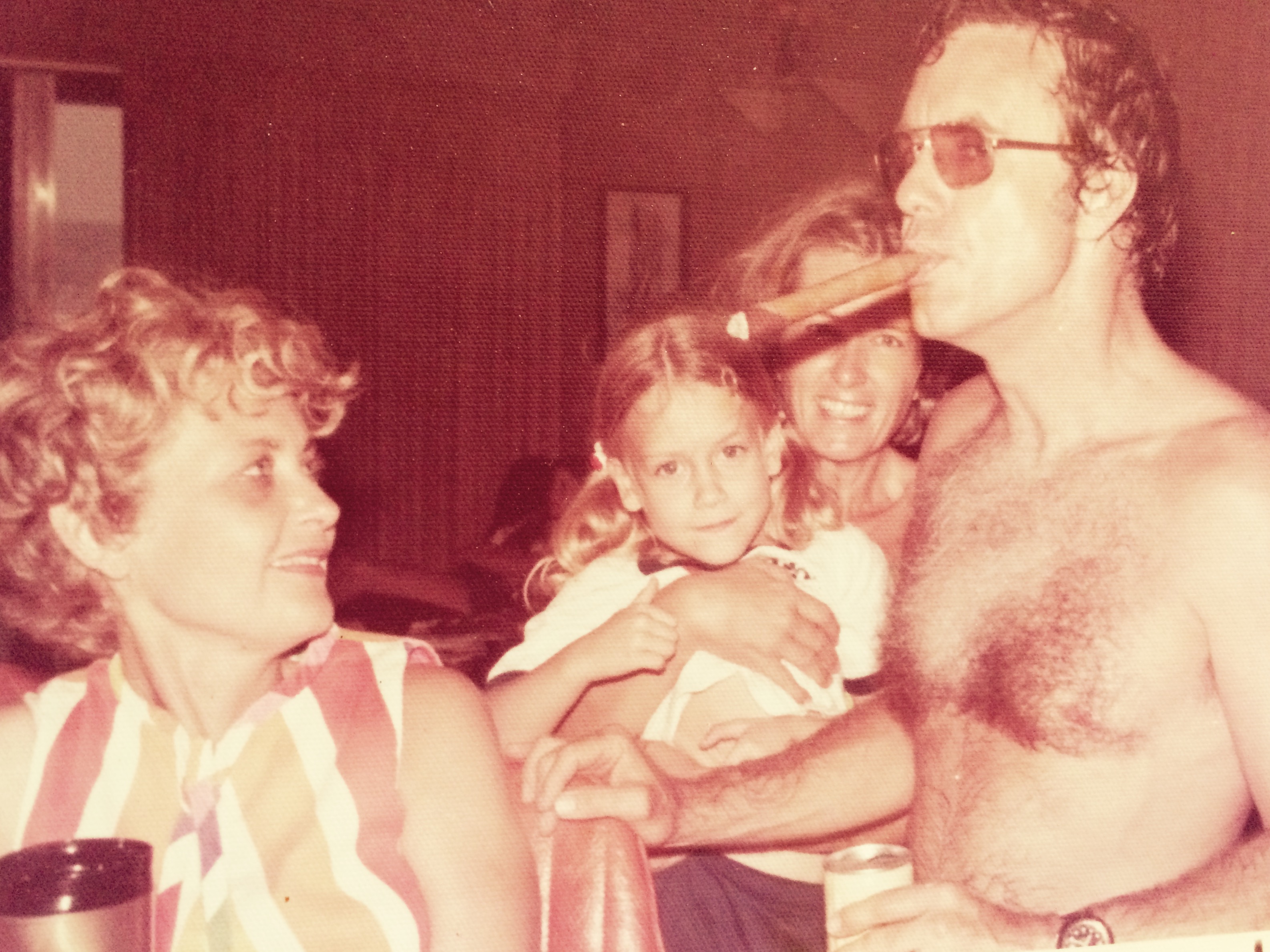
Good times being had at Bolivar at The Singing Sands rental house.
Daddy loved to have picnics at the historic Fort Travis and take us to see the light house where movie legend Patty Duke filmed a movie. And I’m not going to mention the small propeller airplane he landed on the beach because that almost caused my parents to divorce and C. Baby to be arrested. But by the grace of God it worked out and was a colorful memory for me and my 4th grade friends who were actually in the plane – again, you know who you are, and I hope you’re reading this! No one should EVER try this, – he was just lucky on that March morning.
Here’s a not so safer 70’s option for traveling to Bolivar from Beaumont. The back of the pick up truck with my besties Suzanne and Stephanie.
In the 80’s my parents built their own house in the next addition and the good times continued with celebrations, college friends, more crabbing, attempts to wind surf and our young families. I have been fortunate to experience the unique, quirky magic of Bolivar and it is such a part of me. Times change. There is no more tar on the beaches thanks to increased environmental standards, the beautiful brown pelicans are back in full force after being endangered. Hurricane Ike in 2008 which ravaged the area, destroying property and devastating the coastal community, will forever be part of our personal history. Our house was swallowed by the gulf as were many others. I had never witnessed firsthand how powerful Mother Nature could be as we combed the beach looking for our valued beach house possessions and thinking about the heartbreak for families who actually lived on the peninsula full-time.
Now in 2015, it seems to me that Bolivar is back – and back big. My own family rebuilt a house not far from my parent’s old place and there are a variety of new, sherbet-colored houses which pepper the landscape. Recreation is at its southeast Texas finest with fishing, bird watching, ocean kayaking, stand up paddle boarding, beach combing and folks still enjoying themselves in crazy Bolivar beach ways (I’m thinking of some line-dancing a group of spirited people were doing as I rode by in my golf cart last summer).
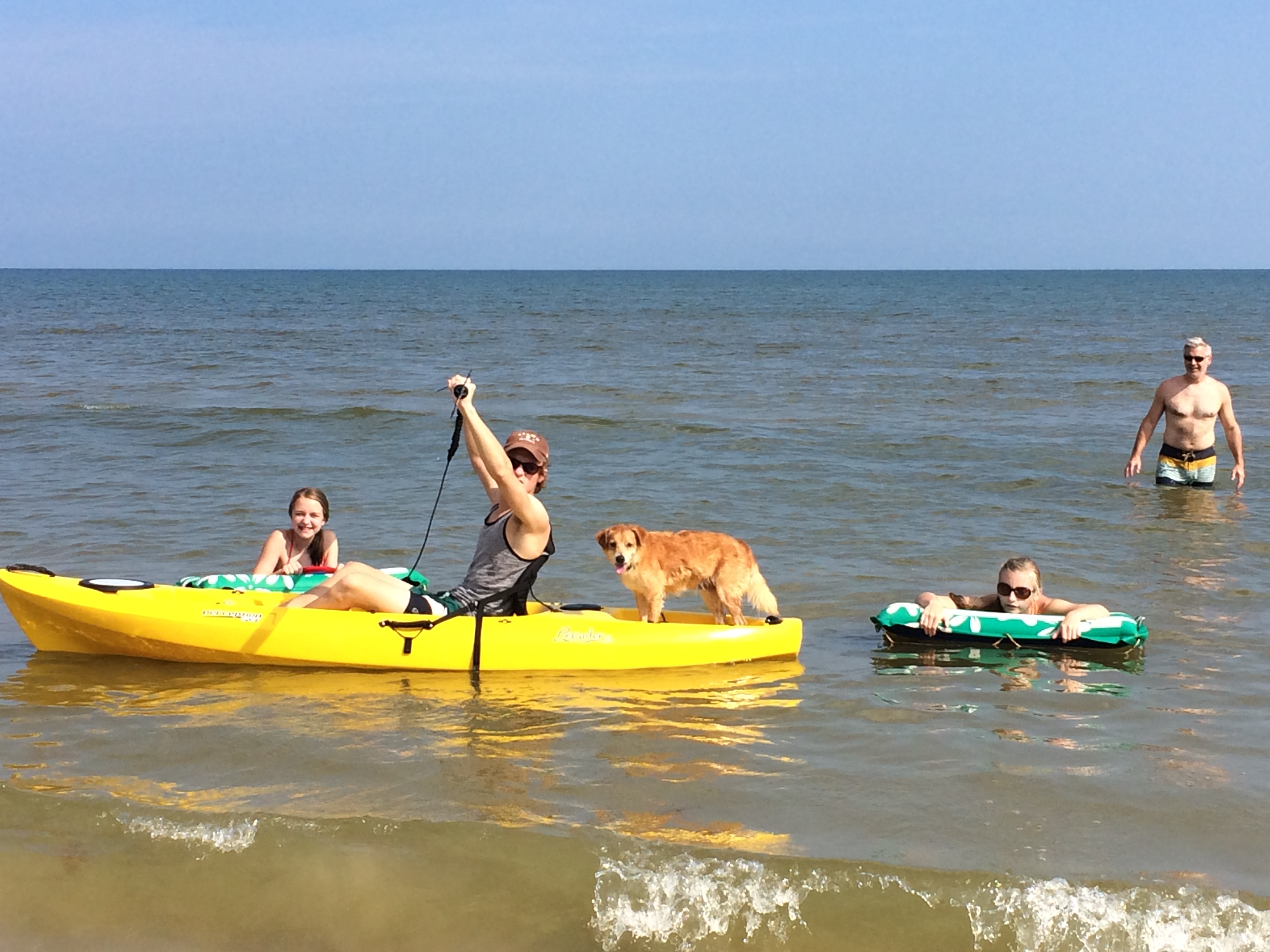
Fun times with the ocean kayak.
A Great Idea ~ The Lone Star Coastal National Recreation Area. Now this is exciting if you haven’t heard!
After Hurricane Ike, some concerned and forward-thinking individuals asked the question, “What can we do in the future to protect our area by enhancing coastal resilience and mitigating storm damage?” This powerful hurricane demonstrated that the undeveloped lands of the Texas coast store vast amounts of surge tide. The storage capacity of this natural landscape of wetlands helps to decrease flooding inland and thus, property damage. The hurricane inflicted less damage on parts of the region that were protected by undeveloped land. Aside from protection against economic loss, our coast is a prolific estuary as Galveston Bay generates $3 billion annually for the seafood industry following Chesapeake Bay in productivity. Rice University’s Severe Storm Prediction, Education, and Evacuation from Disasters (SSPEED) Center, a research organization created after Hurricane Ike and funded by the Houston Endowment, answered the call and an idea was born and grew ~ The Lone Star Coastal National Recreation Area.
Merging Conservation with Tourism: A Winning Combination
You might be asking, “So that sounds good, but what does it mean for us?” A National Recreation Area is a designation by Congress to land and water with significant outdoor recreation potential of national significance – our coast certainly fits the bill. There are 18 NRAs in the United States. They are part of our national system of park units including Big Bend and the Grand Canyon. Each Recreation Area is unique and varies in size, land ownership structure, governing institutions and functional purposes.
A coalition of public and private landowners developed a proposal for the Lone Star Coastal National Recreation Area with influential Houston businessman John Nau as the steering chair and former Secretary of State James Baker as honorary chair and the National Parks Conservation Association leading it forward. Suzanne Dixon, The NPCA Texas regional director, and her office has been working tirelessly connecting and communicating with partners and the involved communities ~
These 130 miles of coastland just have so much potential. People from all around the world already come to the area to go birding at High Island, Matagorda, and the Columbia Bottomlands. The area has excellent kayaking in the coastal marshes, two national wildlife refuges, oyster reefs, great fishing, Civil War-era shipwrecks…all the natural, cultural, architectural, and historical attractions that make it ideal for a national recreation area. Many people just don’t know that it’s here. A Park Service designation would change that.
Simply put, it would unify 4 upper gulf coast counties ~ Matagorda, Brazoria, Galveston and Chambers ~ into a recreation area with shared marketing, recreational activities and the above mentioned conservation benefits through a mosaic of public and private land. The economic impact would be an important boost to tourism attracting 500,000 visitors in the first year, creating 1,200 jobs and $46 million in local sales according to the economic impact study. These numbers would grow in sequential years. Gateway counties such as Jefferson county would reap the benefits, as well.
I know there is ample opportunity for a new term I just learned: geotourism – tourism that is linked to a region’s geography, history and natural resources. Think about all the outdoor recreation we enjoy and is growing – fishing, hunting, kayaking, crabbing, bird-watching, sailing, stand-up paddle-boarding, you name it!
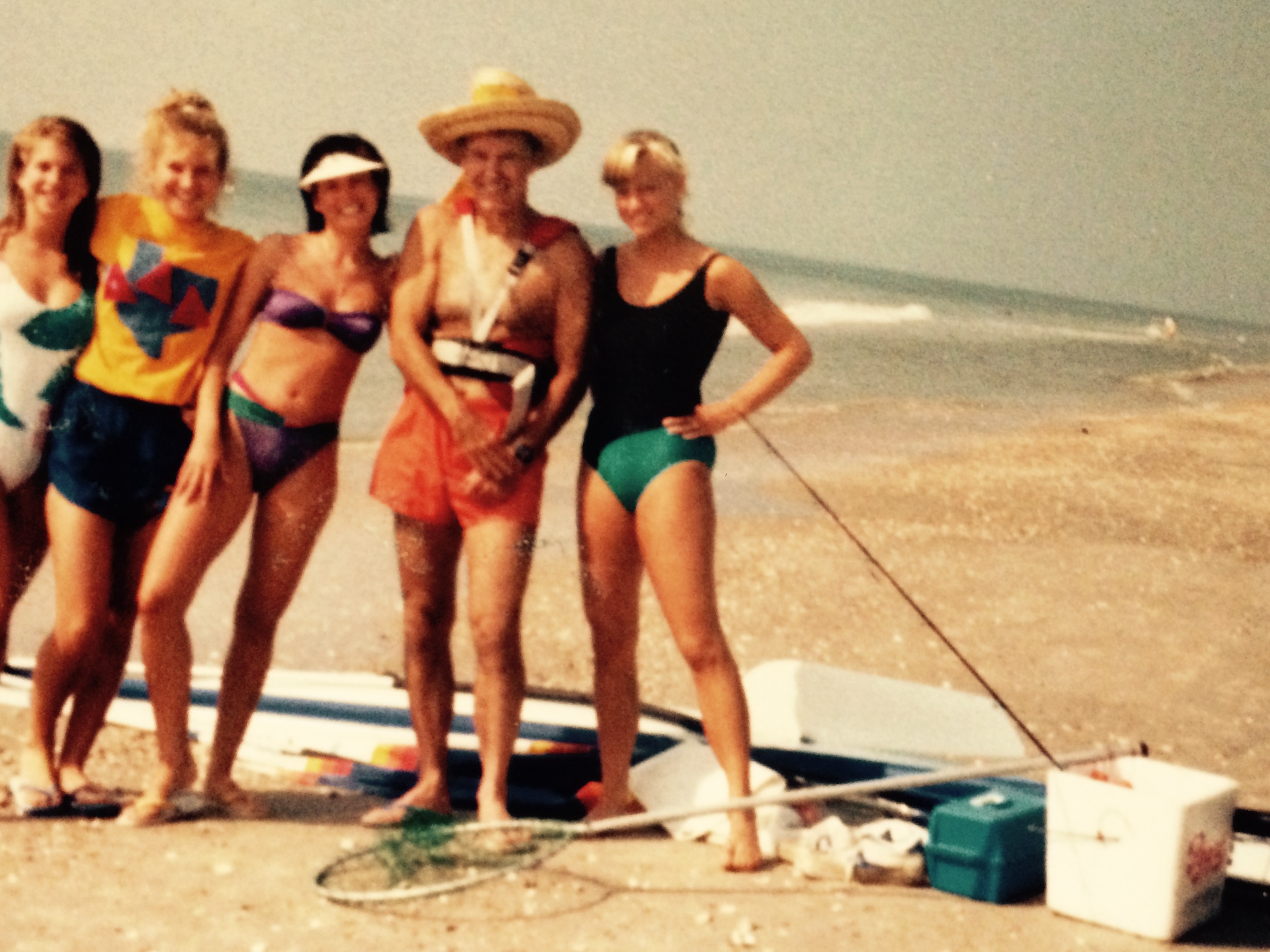
Here’s my dad, the ultimate geotourist with me and college friends. See the crabbing paraphernalia with the cooler filled with crab, beer and chicken necks? The wind surfer? Too much to do, so little time!!
We had the great opportunity to host the Executive Director and Program Manager of former First Lady Laura Bush’s new conservation project called Taking Care of Texas to show them first hand some of the Bolivar / Galveston attractions of the proposed LSCNRA. The mission of TCT is to spur conservation efforts that benefit communities, build on the success of others, and inspire all Texans to join in. They champion stewardship and bring business minds to conservation matters and conservation minds to business matters. What a wonderful and much needed organization. Click on the above link and take a look at their website and like them on Facebook! I was fortunate to accompany them on the first part of their tour and “relearn” about the area. I met the group in Anahuac at the National Wildlife Refuge visitor’s center. We visited The Houston Audubon’s High Island facility at Boy Scout woods. They went on to Galveston to check out the Sea Scout Base in Galveston, a high adventure marine learning destination I can’t wait to visit. It was a wonderful time and NPCA looks forward to working them!!
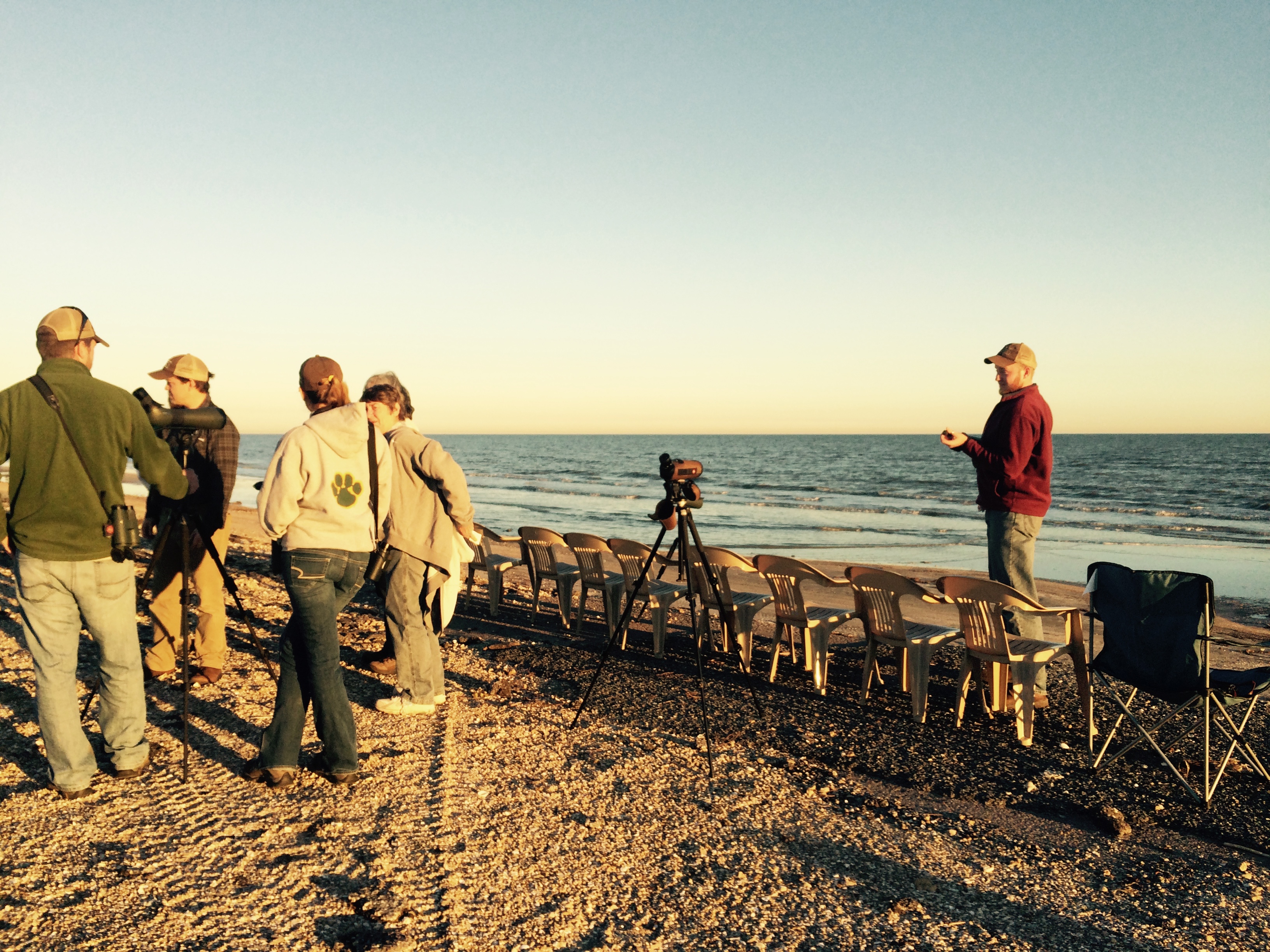
Bird watching on the coast near High Island. Did you know that birding alone generates $82 billion in indirect economic benefits, including 671,000 jobs and $11 billion in local, state, and federal taxes.
It’s A WIN-WIN!
This popular idea is on it’s way to becoming a reality with the next step as the introduction of the legislation in Congress hopefully this spring. Flood damage mitigation, natural beauty and geotourism, positive economic benefits ~ what’s not to love? Suzanne and NPCA understand what’s important to Texans:
Property rights are really important to folks in Texas. So we’ve stressed from the start that landowners’ participation is voluntary. No one will lose a square foot of their property.
With minimal federal involvement in the form of some NPS staff, voluntary participation, and management by the involved partners and landowners, it is a recipe for success in Texas. More to come on this this exciting project. In the meantime, read more about it and learn about the partners and leadership on the National Parks Conservation website. I’ll leave you with this photo of the bay taken while sipping a sting-a-rita and enjoying some fried shrimp and oysters at the Stingaree in Bolivar… It’s a slice of heaven to me.
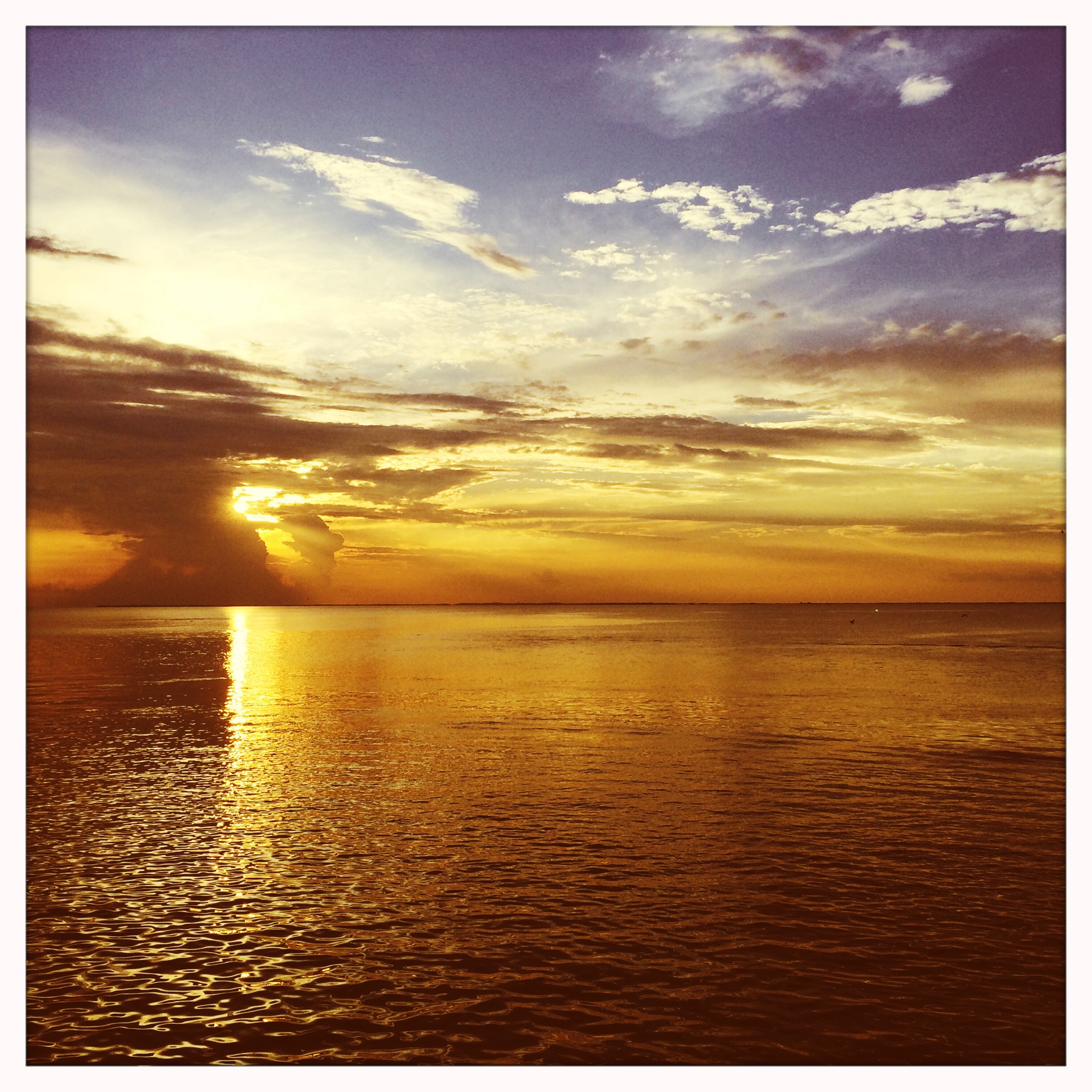
Sun setting on the bay.
Sources:
“The Lone Star Coastal National Recreation Area: Economic Prosperity, Recreation and Flood Mitigation Based on Natural Assets”
“NPCA: A Rising Star on the Texas Gulf Coast”
Houston Chronicle
Taking Care of Texas.org
 myordinaryvoice