What could Mammoths that roamed the earth 65,000 years ago and Spanish Missions in the New World possibly have in common? How could these two vastly different historical events both make news literally days apart?
As a Texan, it is exciting that two national park units in my state recently made big news: The San Antonio Missions National Historical Park and the newly designated Waco Mammoth National Monument. They are both important stories that add to our rich history of our land and our people that are being preserved globally and nationally. These two separate and important events were recognized on a national and global level this July and both celebrated with ceremonies just days ago.
Missions
The San Antonio Missions National Historical Park was designated by the United Nations Educational, Scientific and Cultural Organization’s (UNESCO) World Heritage Committee as a World Heritage Site on July 5, 2015 in Bonn, Germany. This is the first World Heritage Site in Texas and the 23rd in the United States. Many national parks are also World Heritage sites such as the Grand Canyon, Yellowstone, and the Statue of Liberty. A World Heritage designation spotlights the “outstanding universal value” and the “cultural significance” of these missions as they join the list of other important sites such as Stonehenge, The Great Wall of China, and the Giza Pyramid of Egypt. There are 1008 of these sites all over the world.
The designation includes the four missions of San Antonio Missions National Historic Park, The Alamo, one of the original ranches, and their associated cultural landscapes. The missions were established in the 18th century by the Francisan Fathers as an outreach of the Spanish Government and the Catholic Church. Their purpose was to evangelize the regional natives, teach them skills, and minister to their needs in an effort to make them active citizens of the Spanish province, Tejas. The four mission churches within the park hold regular services and are active parishes.
“The World Heritage List recognizes the most significant natural and cultural sites on the planet, and our missions have now earned a prestigious and well-deserved spot on the list. The San Antonio missions represent our nations’s largest collection of Spanish colonial resources,” says Suzanne Dixon, Texas Regional Director for the National Conservation Association.
She continues, “With four of the missions already protected as a national park, their new status as a World Heritage Site will further enhance the experience of visitors while vastly expanding the missions’ impact on the city of San Antonio.”

At the meeting in Bonn, Germany this past July! Left to right: Suzanne Dixon NPCA; Judge Nelson Wolff; San Antonio Missions National Historical Park Archeologist Susan Snow; Henry Muñoz; U.S. Amb. to UNESCO Crystal Nix-Hines; UTSA Dean of the School of Architecture Dr. John Murphy; Councilmember Rebecca Viagran (D3); Mayor Ivy Taylor; Hugh Miller; Shanon Miller, director of the City’s Office of Historic Preservation.
The increased economic impact for the community is noteworthy with $100 million in economic activity and up to 1,000 extra jobs.
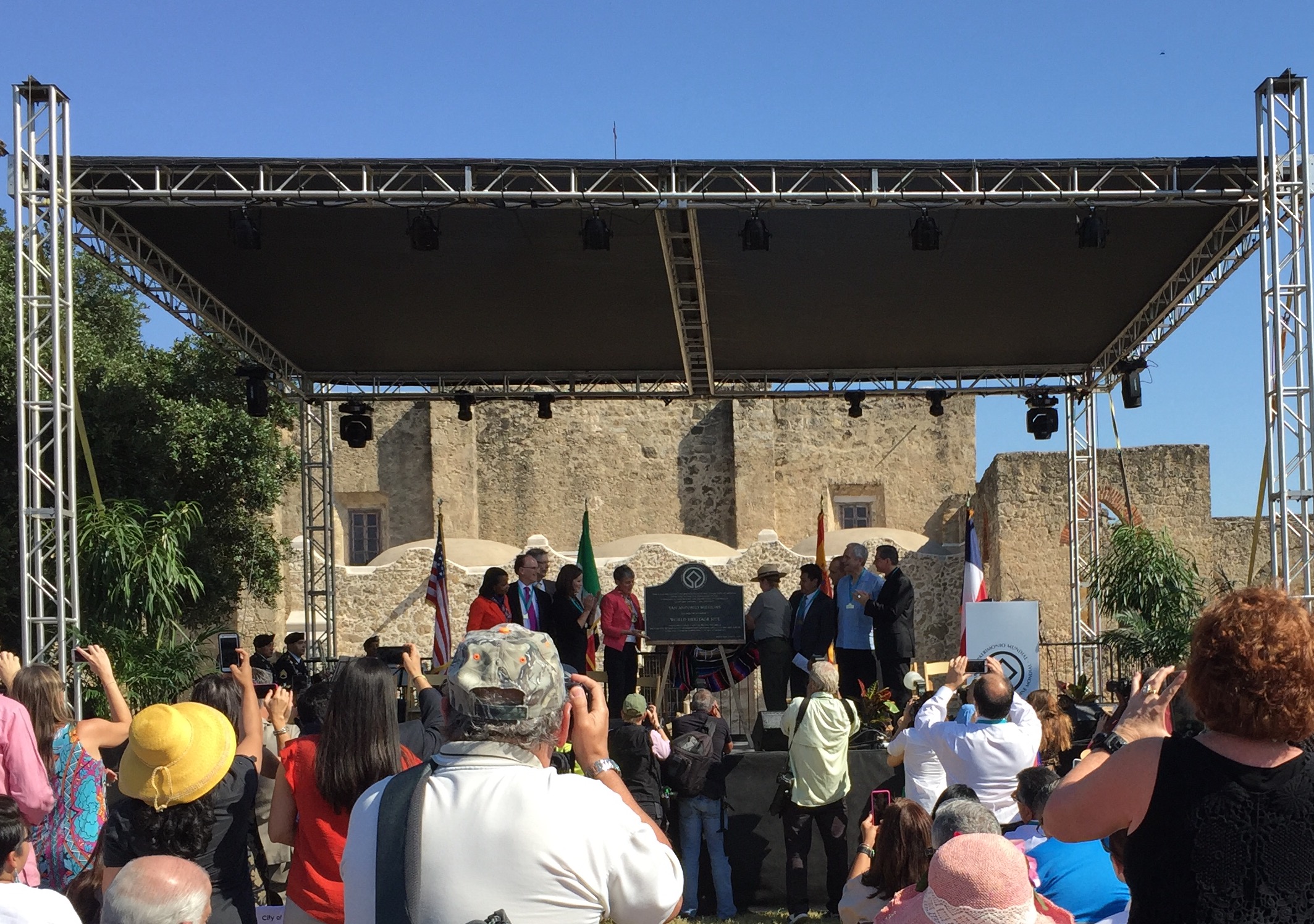
The Unveiling of the World Heritage Plaque in front of Mission San Jose Y San Miguel De Aguayo on October 17, 2015
At the World Heritage Ceremony of the Plaque unveiling this past Saturday, October 17th, Sally Jewell, Secretary of the Interior, spoke about the Pope’s recent visit to the U.S. and his powerful message about climate change and inequality. But she reminded us that he also talked about about the history of Spain, Mexico and the Catholic Church in the United States. The history of connection with indigenous people – sometimes positive and sometimes not so positive – is a story that is told here at the San Antonio Missions and an important part of our history and culture. She also reminded the audience that this designation is good news for San Antonio and the hotels, restaurants, and people that will come to San Antonio that might not have visited Texas before. Now it is on the international map.
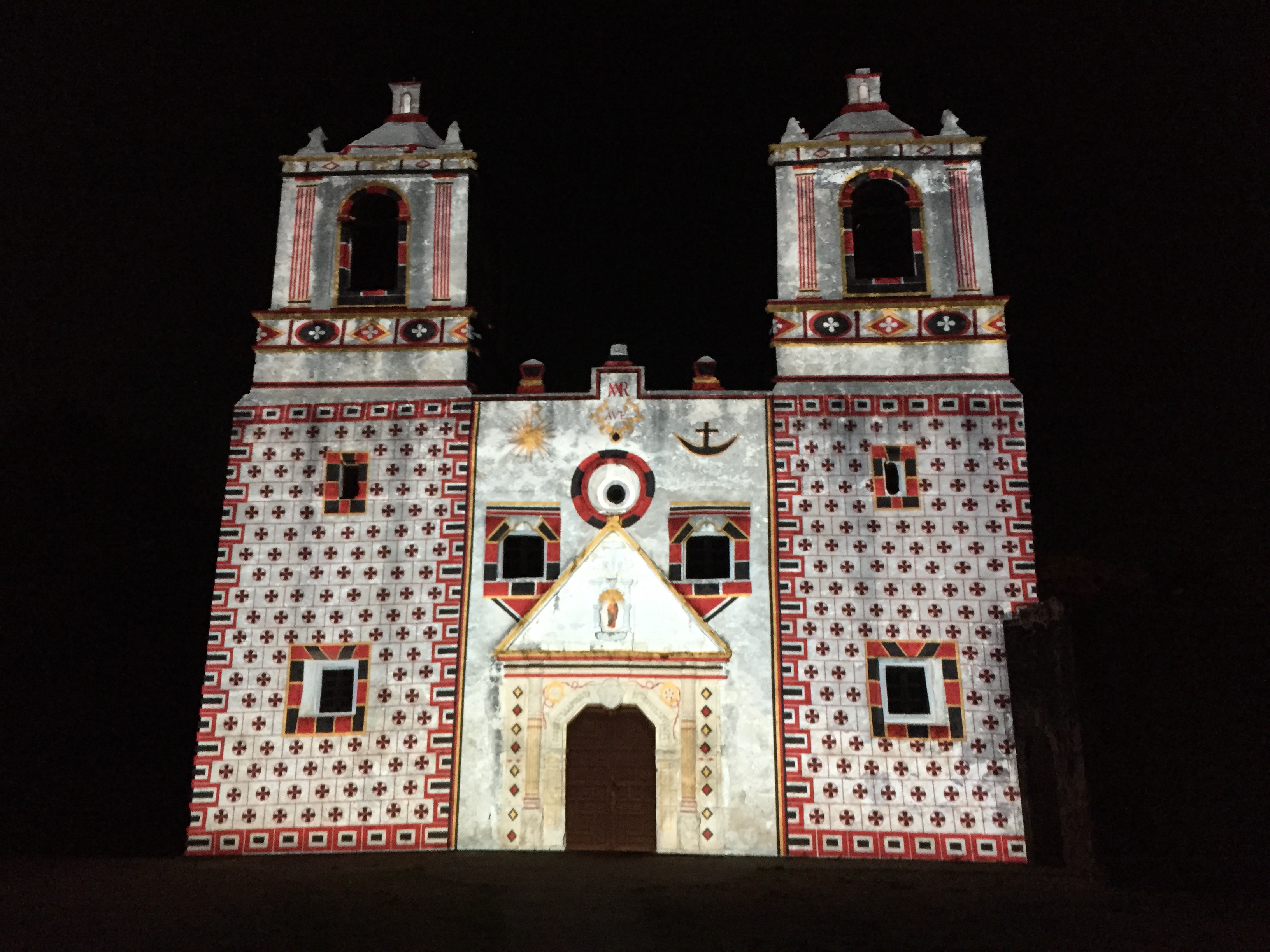
Light Display replicating the Mission Concepcion frescos of the 1700s the night before the World Heritage Ceremony Plaque Unveiling
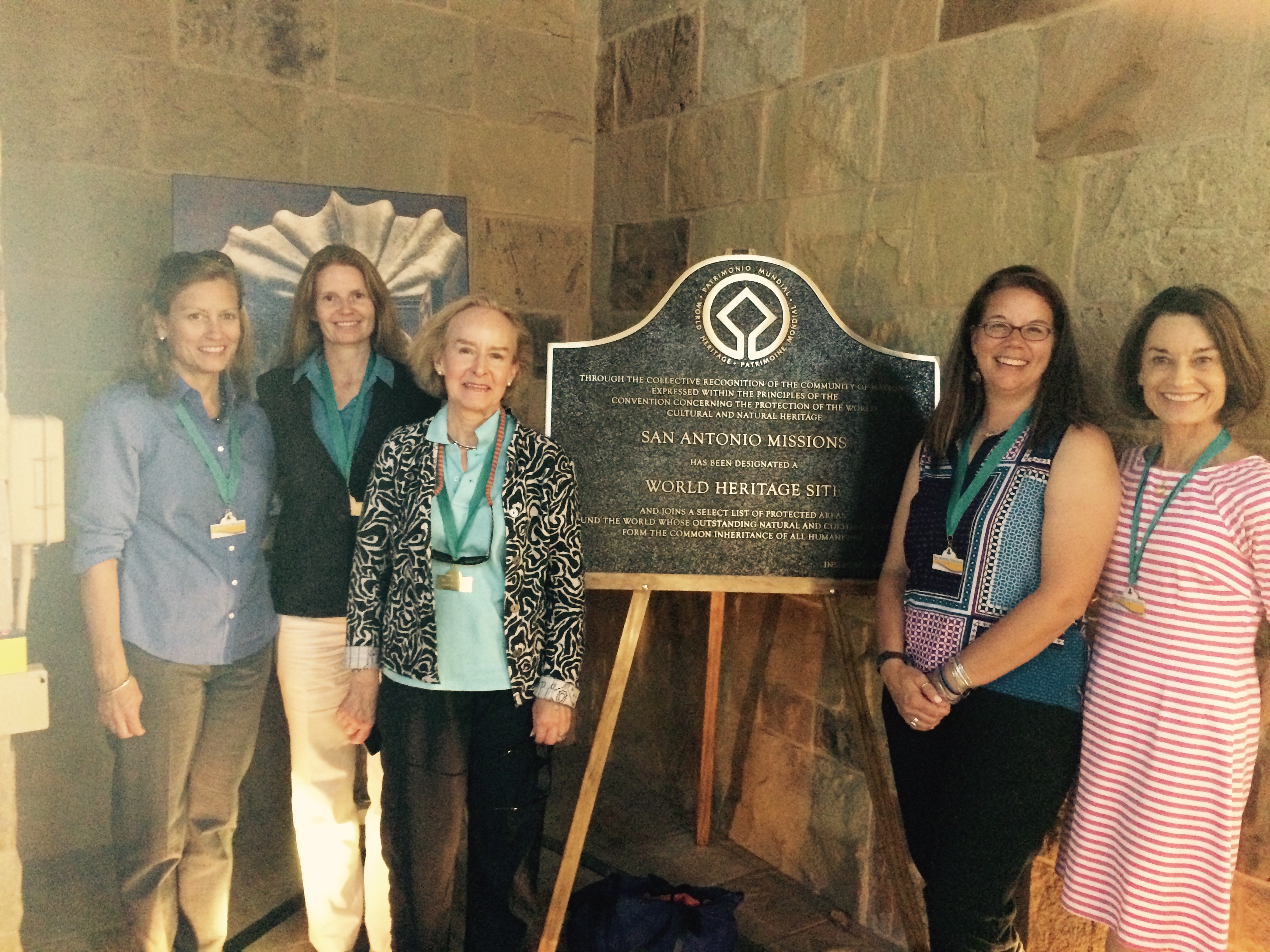
The Plaque up close and personal in the Visitor’s Center after the ceremony with NPCA’s Suzanne Dixon, Some of the Texas NPCA Regional Council Team and Jan Anderson, President US National Committee of ICOMOS
Now Let’s Talk Mammoths
On July 10, 2015, President Obama designated the Waco Mammoth National Monument, our 408th unit of the National Park System, using the Antiquities Act of 1906. Our newest monument sits within 100 acres of wooded parkland along the Bosque River and provides a glimpse into the habitat and lives of Columbian mammoths and other Ice Age fossils.
This story of discovery began in 1978 by two men who were searching for arrowheads near the Bosque River and discovered the only recorded example of a nursery herd (a group of females and their babies, a family unit) of Pleistocene mammoths in the United States. From this point, researchers then found the remains of 24 Columbian mammoths, and also includes a large male or bull mammoth and the remains of a camel and the tooth of a young saber-toothed cat found next to an unknown animal.
In a NPCA interview with Reagan King, the site’s director, she was asked what the significance was in finding this kind of herd. She replied, “One of the goals of paleontology is to look at some object, preferably an animal fossil, and make educated predictions about how that animal lived and died. Because the nursery herd dies together simultaneously, we know that they behaved much like elephants do today. It’s very unusual for fossil remains to tell you about the behavior of animals, but ours provide information that you can’t find anywhere else. That’s why this site is so important to science.”
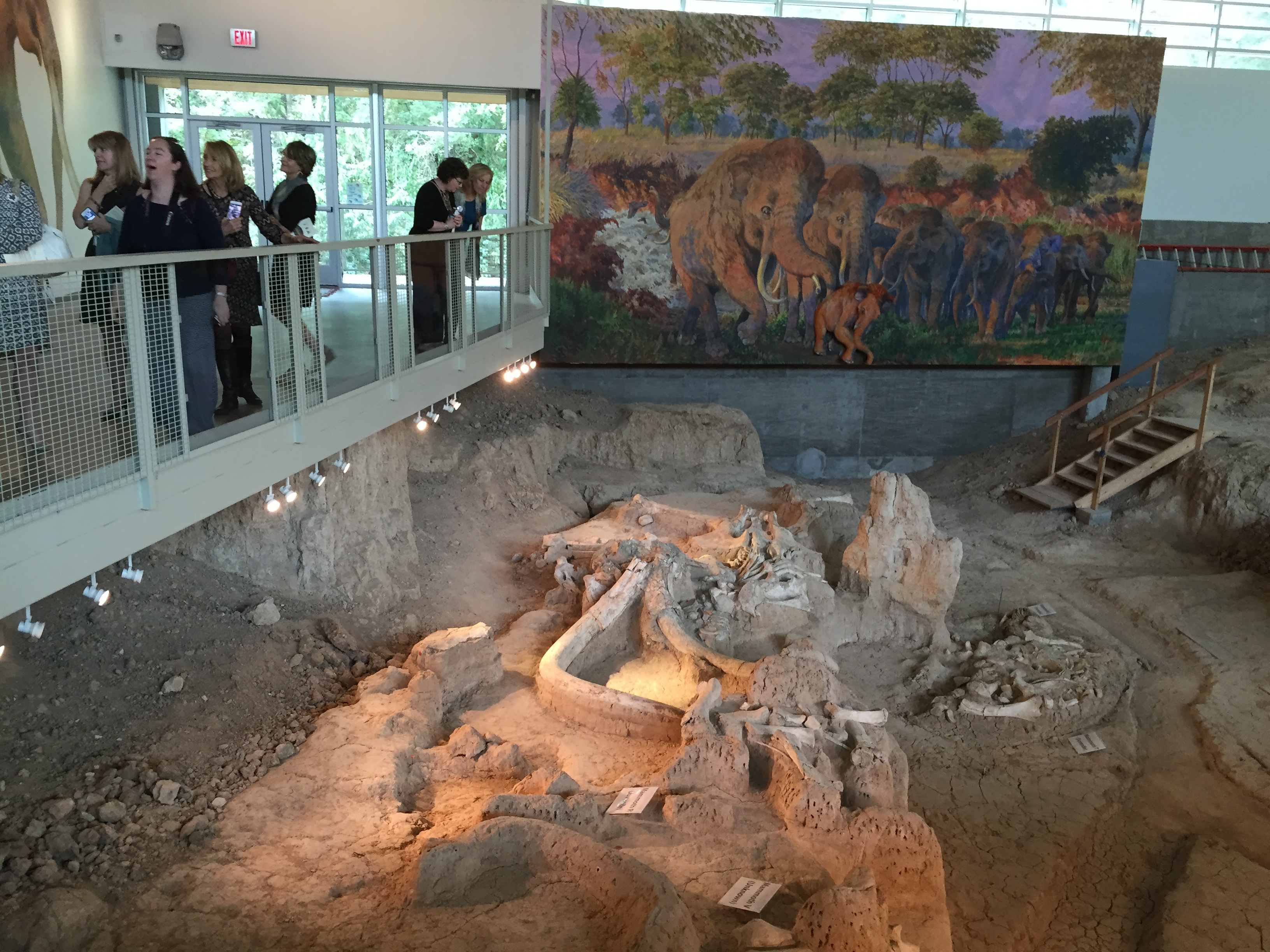
The Exhibit at The Waco Mammoth National Monument
This site designation is a true example of bi-partisan collaboration with partners coming together for a common goal. America’s newest monument was already an established educational facility and a source of pride for the Waco community. It attracts 20,000 visitors a year including large groups of students. Since it was discovered, the site has been collaboratively protected by the City of Waco, Baylor University, and the Waco Mammoth Foundation. The evacuation of the site has been partitioned into phases and the Park Service has been included since the beginning. It’s reported that there are even more mammoth remains yet to be found.
A quote by Texan and former first lady Laura Bush really sums it up: “Today is a special day for Texas. President Bush and I are thrilled that the Waco Mammoth Site is America’s newest national monument. I applaud President Obama, the city of Waco, Baylor University and the National Park Service, who worked to develop, preserve and champion the Waco Mammoth Site. The Waco Mammoth Site takes visitors back in time nearly 65,000 years and reminds us of our country’s connection to the history of our planet. As we approach the centennial of the National Park Service in 2016, this is a great time to celebrate our nation’s parks.”
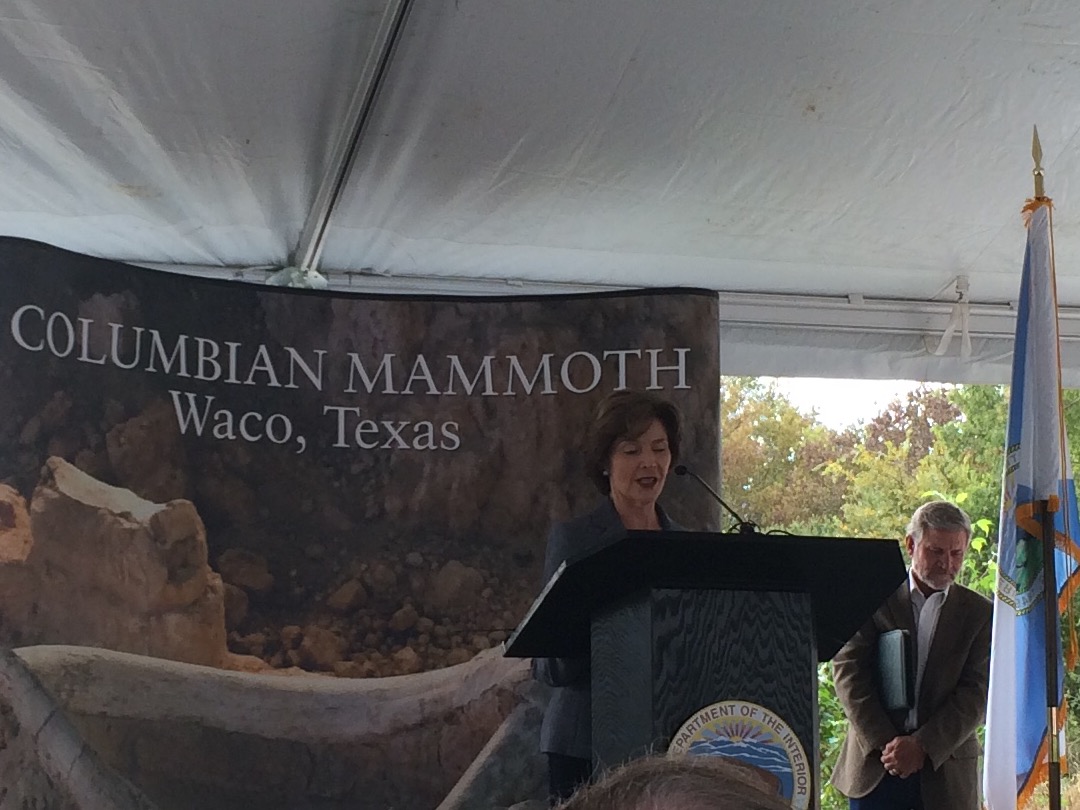
Former First Lady Laura Bush at the designation ceremony on October 5, 2015 promoting the “every kid in a park” program with First Lady Michelle Obama – a new White House youth initiative to get all 4th graders and their families to experience our country’s parks FREE OF CHARGE.
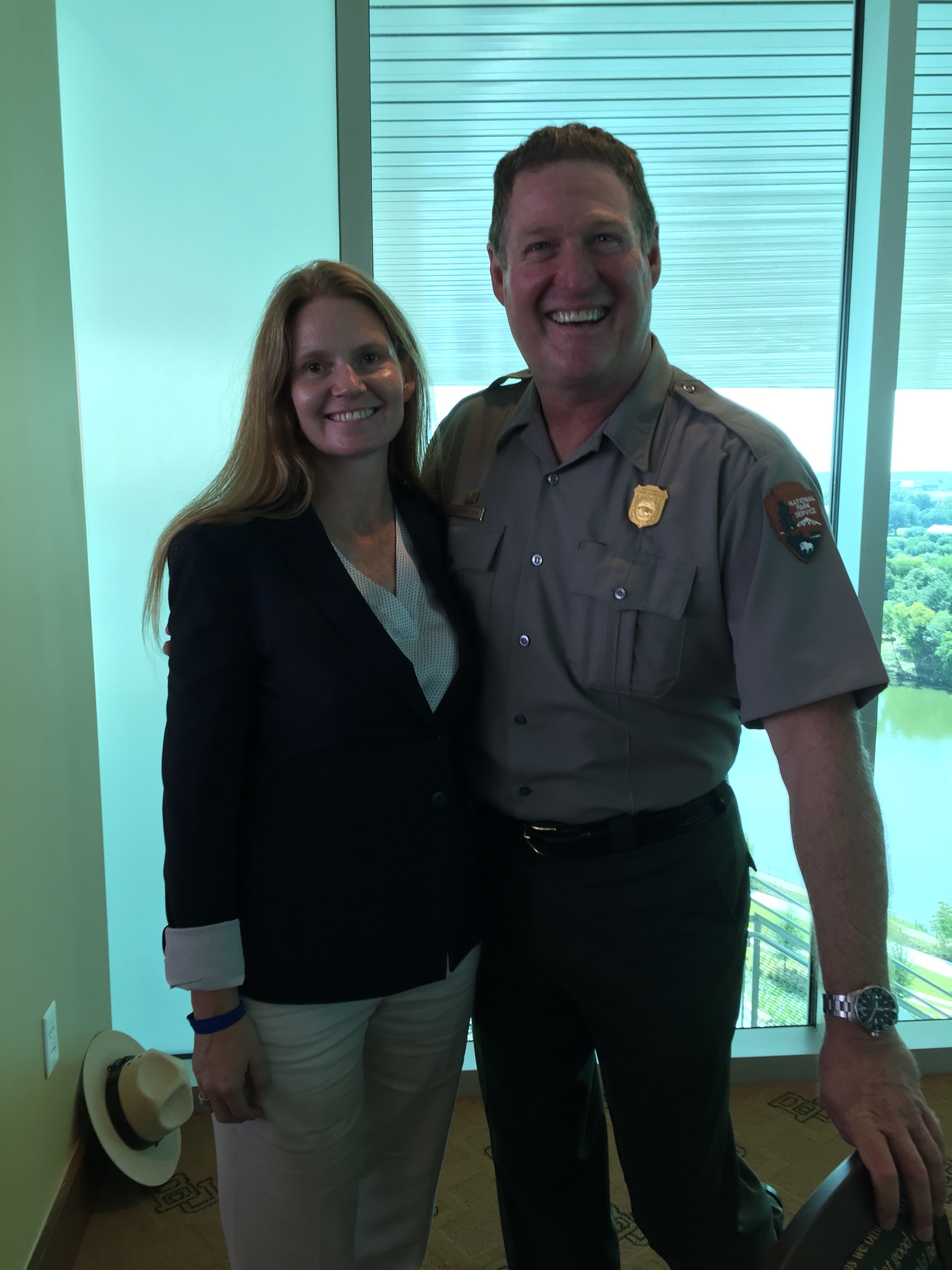
Suzanne Dixon, the National Parks Conservation Association’s Texas Regional Director, was instrumental in linking all the moving parts to get the project to the finish line of the 408th NPS Site.
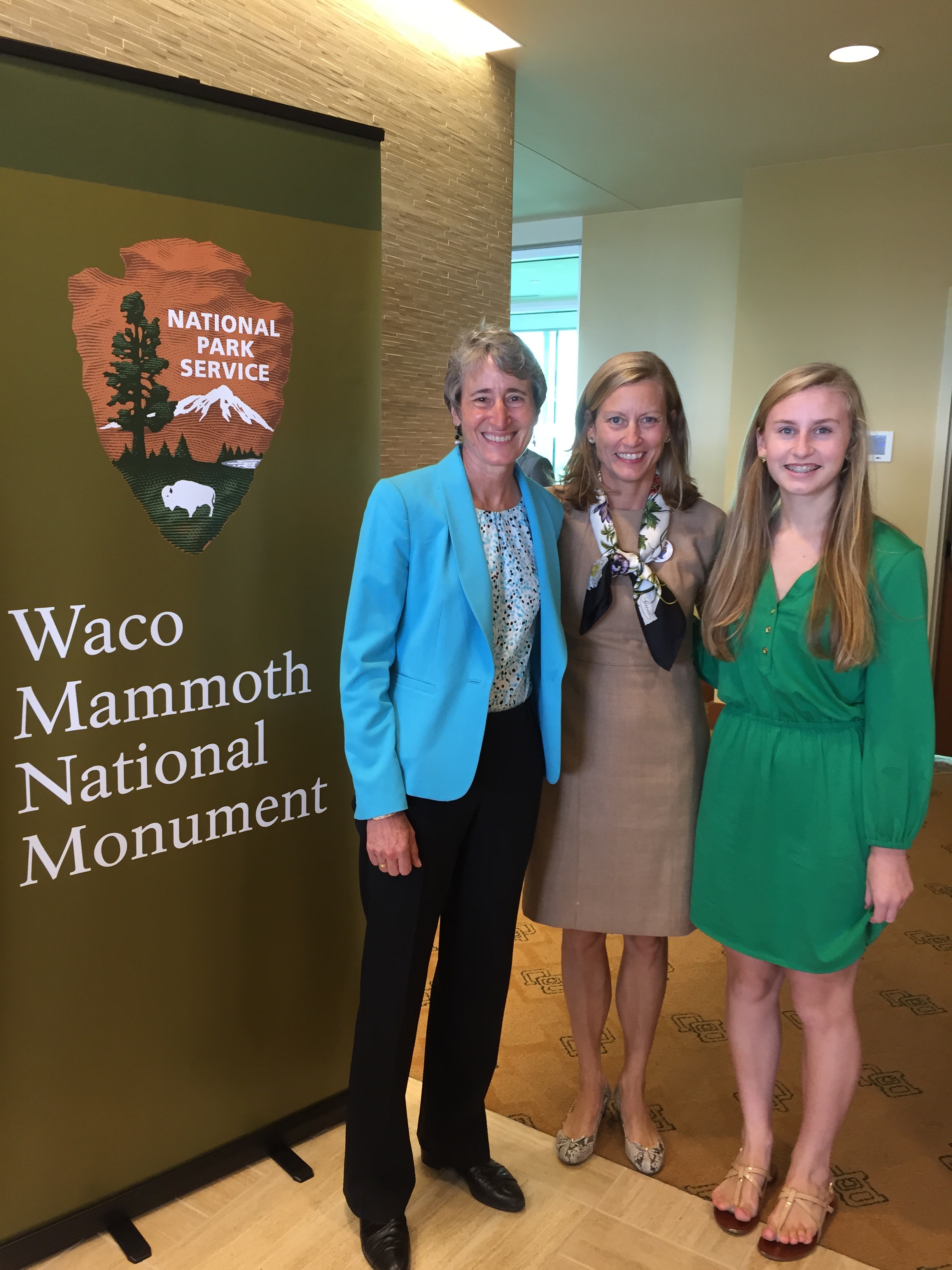
Took my daughter Sarah out of school to attend the dedication ceremony and witness history in the making. Here we are with The Secretary of the Interior Sally Jewell – I’m such a fan.
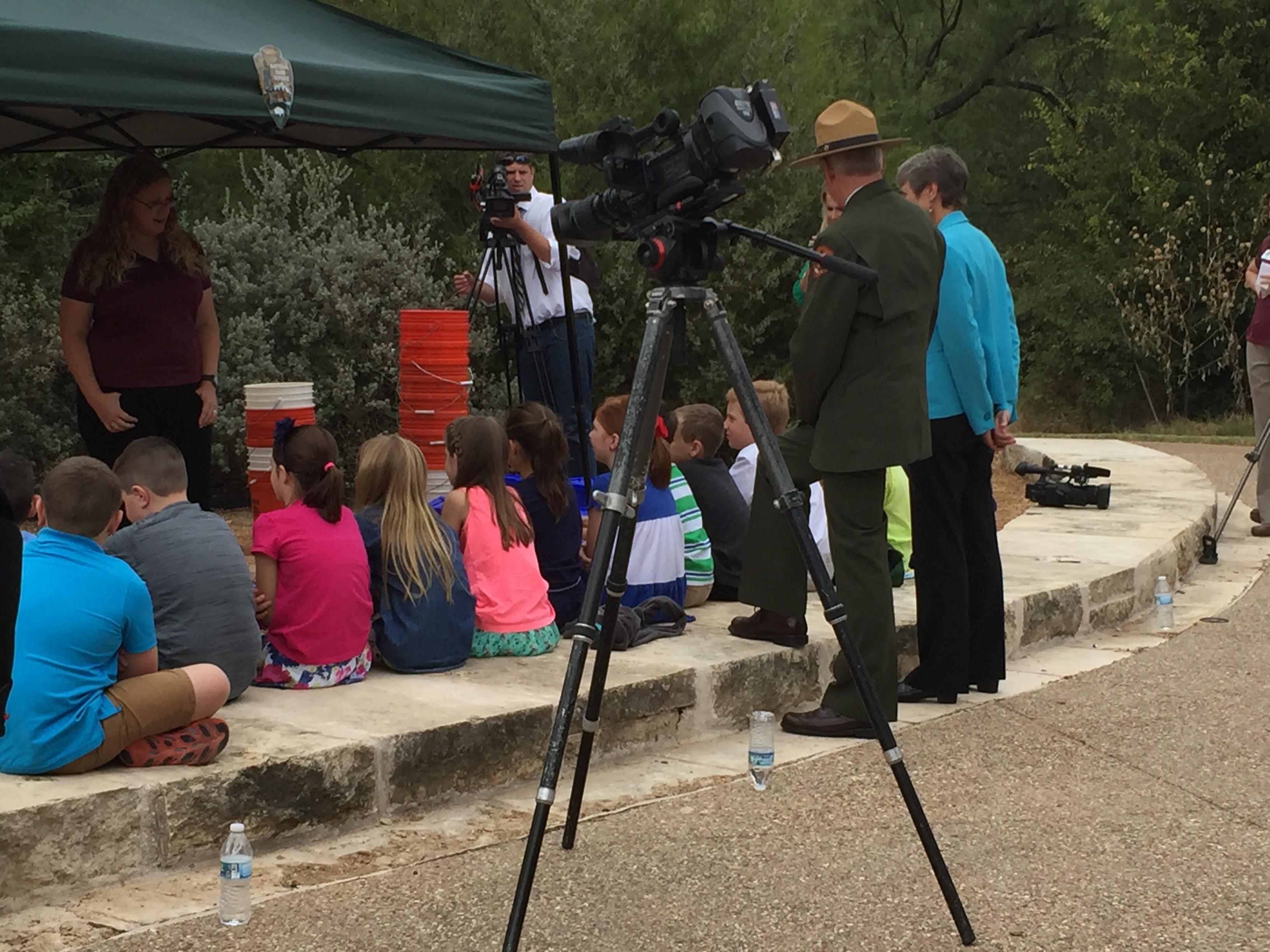
NPS Director Jonathan Jarvis and Secretary of Interior Sally Jewell overseeing a presentation to school children at the dedication.
So hey y’all – what are you waiting for? Go on a mammoth mission to get to these two special places or the National Park of your choice.
It’s our history and they are open for business in a big way.
 myordinaryvoice